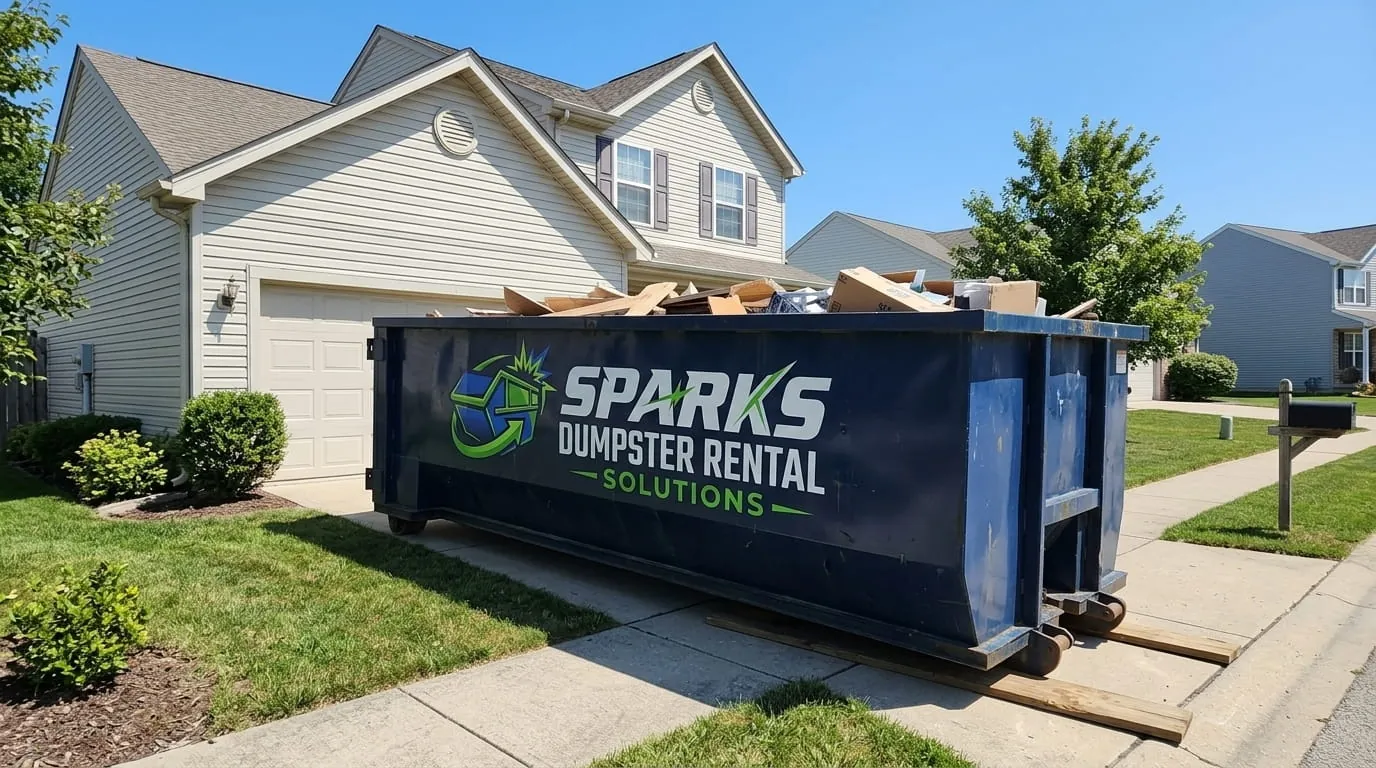
Thirty years running roll-offs in and around Sparks, and I can tell you that nothing fills a dumpster faster or heavier than a roof. Siding you can haul, drywall you can crunch down, but a roof tear-off is dense, abrasive, and unforgiving on the math. Get the bin size wrong and you are either paying for air you did not use or, far worse, eating overage charges because you blew past the weight limit before the second slope was even stripped. This guide walks you through the numbers the way we work them out on the phone with Spanish Springs contractors and Sparks homeowners every week.
Why Roofing Debris Is in a Class of Its Own
Most dumpster math is about volume. A roof is about weight. Asphalt shingles are petroleum-saturated, mineral-coated, and when you tear off an old roof you are also pulling nails, felt underlayment, drip edge, flashing, and years of accumulated grit baked in by our high-desert sun. A 20-yard bin loaded with construction wood might weigh three tons. That same bin packed with shingles can hit eight or nine tons and crush the axle rating of the truck that has to come get it. That is exactly why we steer roofing jobs toward a dedicated, smaller bin rather than the big box you might picture.
The rule we live by: for tear-offs, size down on the cube and respect the tonnage. A 10-yard dumpster or a 15-yard dumpster is almost always the right call for a residential roof, even when the pile looks like it should need something bigger. Those lower-profile bins also have shorter walls, which matters when your crew is pitching bundles over the side all day.
The Shingle Weight Math
Roofers measure in squares. One roofing square equals 100 square feet of roof surface. Shingles are sold in bundles, and it takes three bundles to cover one square with standard product. So the first thing we ask is: how many squares is the roof?
Estimating Your Squares
If you have the original job paperwork, the square count is on it. If not, take the building footprint, add for overhangs, and multiply by a pitch factor. A simple gable in a newer Spanish Springs subdivision might run 20 to 25 squares. A sprawling older ranch near downtown Sparks can be 30 squares or more. When in doubt, count the bundles the installer left in the attic or round up from the footprint.
Turning Squares into Tons
Here is where the shingle type decides your bin. Weights vary by manufacturer, but these are the field numbers we plan around:
| Shingle Type | Approx. weight per square | 25-square roof, single layer |
|---|---|---|
| 3-tab asphalt | ~230-250 lbs | ~2.9-3.1 tons |
| Architectural (dimensional) asphalt | ~400-430 lbs | ~5.0-5.4 tons |
| Concrete tile | ~900-1,100 lbs | ~11-14 tons |
| Clay tile | ~600-900 lbs | ~7.5-11 tons |
Read that table twice. A 25-square roof of lightweight 3-tab is about three tons and sits comfortably in a 10 or 15-yard bin. The same roof in architectural shingles nearly doubles the weight. And if you are tearing off a tile roof, the numbers explode, which brings us to a problem we see constantly out here.
A Hard Warning on Concrete and Clay Tile Roofs
Plenty of desert homes around Washoe County wear concrete or clay tile for the looks and the heat performance. Beautiful roofs, brutal tear-offs. A single square of concrete tile can weigh four to five times what asphalt does. We have watched homeowners order a bin sized for shingles, start stacking tile, and bury the weight allowance before they finished one slope.
If you are pulling tile, size down the cube even further and order with weight tonnage front and center. Tell us it is tile before you book. We will spec a 10-yard bin with an appropriate tonnage cap, and depending on the roof we may plan for a swap-out mid-job rather than one oversized load. Never, ever fill a large bin with tile to the top. You will not be able to legally haul it, and you will pay to have it partially re-handled. When tile is in play, talk to us first through our roofing dumpster rental service so we can run your specific numbers.
Single Layer or Multiple?
This is the question that catches people out, especially on the older rail-town homes near downtown Sparks and in the established neighborhoods east of the tracks. Nevada code and most jurisdictions allow a second layer of shingles to be laid over the first before a full tear-off is required. That means a lot of our older housing stock is carrying two, sometimes three layers of roofing.
Every layer multiplies your tonnage. A 25-square roof that is three tons as a single layer becomes six tons at two layers and close to nine at three. Before you order, get up on a ladder and check a cut edge at the eave or a rake. Count the layers. If you find two or three, tell us, because your bin size and tonnage plan change completely. This is the single biggest cause of overage surprises we see.
Why Northern Nevada Roofs Wear Out
Our climate is hard on roofing, and that is good for your tear-off business and important for your planning. A few local realities:
- High-desert UV. Sparks sits at elevation with thin, dry air and relentless sun. UV cooks the oils out of asphalt shingles faster than it does in milder climates, so roofs here often need replacing a few years ahead of their nominal rating.
- Big daily temperature swings. A forty-degree spread between a summer afternoon and the following dawn makes shingles expand and contract constantly. That thermal cycling cracks and curls them over time.
- Sierra snow load and ice dams. Storms rolling off the Sierra can dump heavy, wet snow. The freeze-thaw cycle drives ice dams at the eaves, backs water up under the shingles, and rots decking. Tear-offs that start as a shingle job often grow into decking replacement, which adds wood debris to your bin.
- Wind events. The Truckee Meadows gets strong gusts that lift tabs and tear off ridge caps, especially on aging roofs that have lost their seal strip adhesion.
Put it all together and you understand why the fast-growing Spanish Springs subdivisions built in the last couple of decades are now hitting their first major re-roof wave, while the older homes closer to the Sparks rail yard are on their second or third.
Protecting the Driveway and the Street During Tear-Off
A roof tear-off throws debris everywhere, and roofing nails are a tire's worst enemy. Before the first shingle comes off, think about what the bin sits on and what rains down around it.
- Lay plywood or OSB sheets under the bin's wheels and tongue so the steel does not crack or stain the concrete. We talk through this in detail in our guide on protecting your driveway during a dumpster rental.
- Tarp the ground along the drip line to catch the bulk of the tear-off so you can gather nails and scrap instead of raking them out of landscape rock.
- Run a magnetic sweeper over the driveway, walkways, and street every evening. Desert lots with decorative gravel hide nails for months otherwise.
- Keep the loading side of the bin clear so your crew pitches debris in, not around it.
Placement on Desert Lots
Where the bin goes matters as much as its size. On the wider lots common in Spanish Springs and the north valleys, you usually have room to set the bin close to the house on the driveway, which shortens the carry for your crew. On the tighter older parcels near downtown, we sometimes need a street placement, and that can require a permit from the city or county. Check before the truck rolls. Give the driver a firm, level surface, clear overhead of low branches and power lines, and at least sixty feet of straight approach so we can position and later pick up cleanly. If you are unsure what will fit, our roll-off dumpster rental team will walk the options with you.
Avoiding Overage Fees
Overage charges happen when the loaded bin exceeds the tonnage included in your rate. On roofing, that is almost always a weight problem, not a volume one. Here is how to stay clean:
- Do the square-to-ton math before you order, using the heavier number if you are unsure of shingle type.
- Count your layers and multiply accordingly.
- Declare tile up front so we cap tonnage correctly and plan for a swap if needed.
- Load low and level. A roofing bin that looks half empty by volume may already be at its weight limit. Resist the urge to top it off with that stray pallet of leftover wood.
- Keep contaminants out. A tear-off bin should be roofing material, not the old water heater or paint cans.
If you are still unsure which size fits your job, our guide to what size dumpster you need lays out the whole lineup, and you can always browse the full range of services we run across Sparks and Washoe County.
Let's Size Your Roofing Bin Right
Every roof is different, and a two-minute phone call saves you from a two-hundred-dollar overage. Tell us your square count, shingle type, and layer count, and we will put the right bin on your driveway with the right tonnage built in. Call Sparks Dumpster Rental Solutions at (775) 414-9980 or reach out through our contact page and we will get your tear-off set up right the first time.

Owner, Sparks Dumpster Rental Solutions — sharing straight advice from years of local hauling across Sparks and Washoe County.
Frequently Asked Questions
What size dumpster do I need for a roofing tear-off in Sparks?
For most residential tear-offs, a 10-yard or 15-yard dumpster is the right call. Roofing debris is heavy, so you want a smaller, lower-walled bin with the correct tonnage rather than a big box you can only fill partway. Give us your square count, shingle type, and number of layers and we will spec it exactly for your roof.
How do I estimate how many squares my roof is?
One square equals 100 square feet of roof surface, and it takes three bundles of standard shingles to cover it. Take your building footprint, add for overhangs, and multiply by a pitch factor, or count the bundles an installer may have left in the attic. A newer Spanish Springs gable often runs 20 to 25 squares, while a sprawling older Sparks ranch can hit 30 or more.
Why do tile roofs need a smaller dumpster than asphalt?
Concrete and clay tile weigh roughly four to five times what asphalt shingles do per square. A 25-square tile roof can run 11 to 14 tons, so filling a large bin with tile makes it too heavy to haul legally. For tile, we size down the cube to a 10-yard bin, cap the tonnage carefully, and sometimes plan a mid-job swap. Always tell us it is tile before you book.
How do multiple shingle layers affect my dumpster size?
Every layer multiplies your tonnage. A 25-square roof that weighs about three tons as a single layer of 3-tab becomes roughly six tons at two layers and nearly nine at three. Many older homes near downtown Sparks carry two or three layers, so check a cut edge at the eave before ordering and tell us the count so we plan the right bin and tonnage.
How do I keep roofing nails from wrecking my driveway and tires?
Lay plywood under the bin's wheels and tongue, tarp the ground along the drip line to catch the tear-off, and run a magnetic sweeper over the driveway, walkways, and street every evening. Desert lots with decorative gravel hide nails for months, so a nightly sweep during the job is the cheapest insurance you will buy.