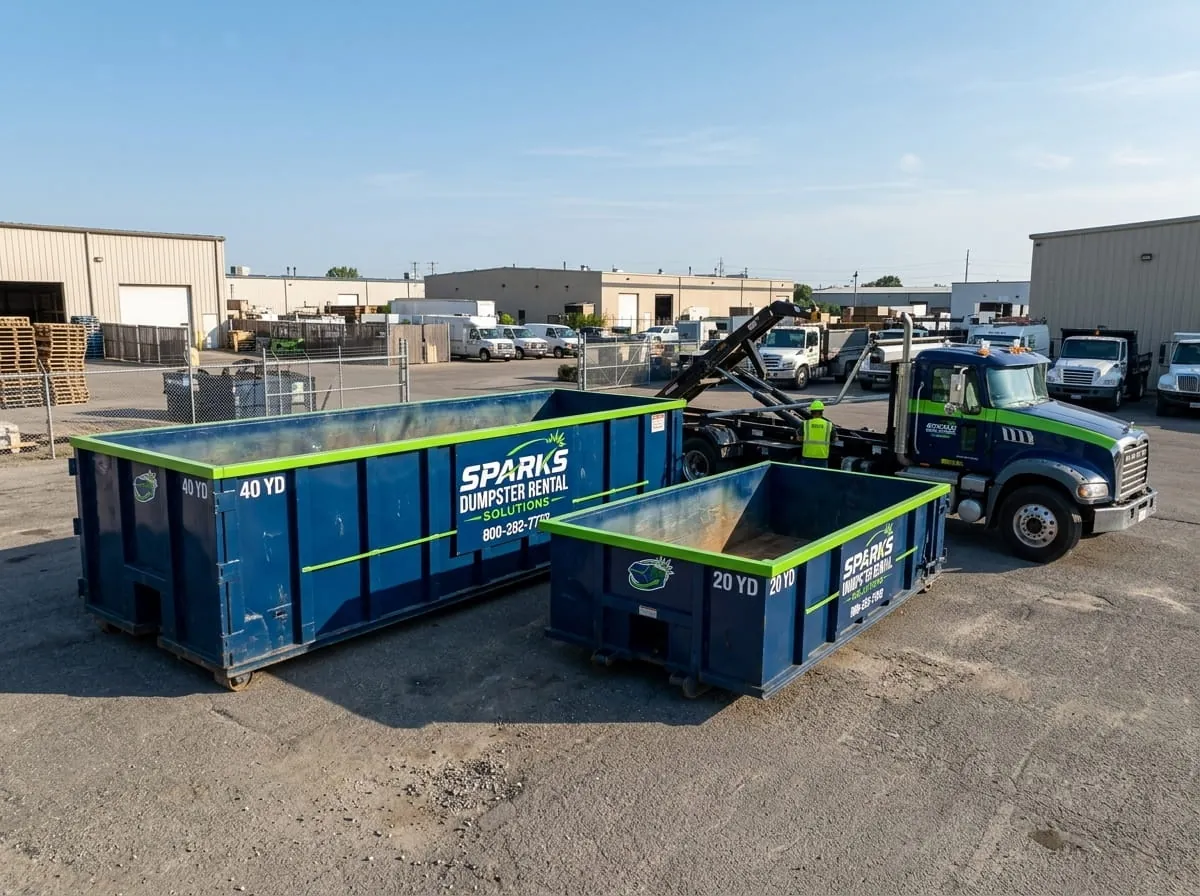
If you are planning a renovation, cleanout, or construction project in Sparks, one of the first questions that comes up is whether you need a permit to drop a roll-off dumpster at your home or job site. It is a smart question to ask, because the answer changes depending on exactly where the container is going to sit. The short version is this: if the dumpster stays on your own private driveway or property, you almost never need a permit. If it has to sit on a public street, sidewalk, or city right-of-way, you typically do need a permit, and that permit is pulled from whichever government body controls the roadway in front of your address.
At Sparks Dumpster Rental Solutions, we have placed thousands of containers across Sparks, Spanish Springs, Sun Valley, and the greater Washoe County area, and we handle this question on nearly every call. Below we break down when a permit is needed, who issues it, roughly how long it takes, and the practical steps our team takes to keep your rental simple, legal, and off the public street whenever possible.
Private Property Versus Public Right-of-Way
The single most important factor is whether the dumpster is going to rest entirely on private property or whether any part of it will encroach onto the public right-of-way. A right-of-way is the strip of land the city or county controls for roads, sidewalks, curbs, gutters, and utility access. It often extends several feet beyond the edge of the visible pavement, which surprises a lot of homeowners who assume their property line starts at the curb.
When your container sits fully on your own driveway, in a side yard, or on a private parking lot, it is on private property, and a municipal street permit generally does not apply. You still want to respect your own lot lines and avoid blocking shared access, but you are not asking the government for permission to use public land.
When the only practical spot is the street in front of your house, or when the driveway is too short and the container tail would hang into the roadway or over the sidewalk, the dumpster is now occupying public right-of-way. That is the scenario that triggers a permit, because the governing agency needs to know something is being placed in the roadway, confirm it will be marked safely, and make sure emergency access and traffic flow are protected.
Who Issues the Permit in and Around Sparks?
Sparks sits inside Washoe County alongside the City of Reno, and the three jurisdictions share a tightly woven metro area. The agency you deal with depends on the specific address:
- City of Sparks: If your project is within Sparks city limits and the dumpster needs to go on a Sparks public street, the City of Sparks is the agency that reviews a right-of-way or encroachment permit for that placement.
- City of Reno: Many neighborhoods flow seamlessly between Sparks and Reno, and some addresses that feel like Sparks are actually served by Reno roadways. If the street is a Reno street, the City of Reno handles the encroachment permit.
- Washoe County: For properties in unincorporated Washoe County, including pockets around Sun Valley and the outskirts of Spanish Springs, the county is the right-of-way authority rather than either city.
Because the line between these jurisdictions is not always obvious from the street, we recommend confirming the correct agency before you assume. When you book with us, we help identify which authority governs your block so you are talking to the right office from the start.
Who Pulls the Permit, and How Long Does It Take?
For a street or right-of-way placement, the permit is usually tied to the property or the party doing the work. In practice that often means the property owner, the general contractor, or the rental company files the application, depending on how the agency structures it. Our team coordinates this with you so nothing falls through the cracks, and we help assemble the placement details the reviewer will want, such as the location, how long the container will stay, and how it will be marked.
Timelines genuinely vary. Some right-of-way requests are turned around quickly, while others take longer if the location raises traffic, parking, or utility questions, or if an inspection is required. Processing times, documentation requirements, and fees also change from time to time and differ between the City of Sparks, the City of Reno, and Washoe County. For that reason we never quote an exact day count or a set dollar figure up front. The accurate move is to confirm the current requirements directly with the governing agency for your address, and we are glad to help you coordinate that conversation and plan your delivery date around a realistic approval window.
If your timeline is tight, this is one more reason a driveway placement is attractive. Keeping the container on private property removes the permit from the critical path entirely, so your delivery is not waiting on an outside review.
Wide Driveways on Newer Spanish Springs Lots
One of the advantages of renting in this market is that a large share of newer homes, especially across the Spanish Springs subdivisions, were built with generous driveways and deeper lots. Many of these properties have three-car garages and wide, flat concrete aprons that comfortably hold a standard roll-off with room to spare for your vehicles. That makes driveway placement the easy, permit-free default for a huge number of local projects.
If you live on one of these newer streets, there is a good chance we can set your container entirely on your own driveway, keep it clear of the sidewalk and gutter, and avoid any right-of-way permit altogether. When you call, we can talk through your driveway dimensions and the container size that fits best, whether it is a smaller box for a garage cleanout or a larger one for a roofing or remodel job. Our residential dumpster rental service is built around exactly this kind of clean, on-property drop.
HOA Rules in Master-Planned Communities
Permits are only one layer. Many Sparks and Spanish Springs neighborhoods are master-planned communities with homeowners associations, and HOA rules are separate from anything the city or county requires. An HOA may limit how long a dumpster can stay, require it to be placed on the driveway rather than the street, restrict weekend or holiday deliveries, or ask that it be positioned to minimize visibility from the road.
These covenants are enforced by the association, not the municipality, so a project can be perfectly legal with the city and still run afoul of HOA rules if you skip the step of checking. Before your delivery, review your community guidelines or contact your HOA manager to confirm placement, duration, and any screening expectations. If your HOA pushes you toward driveway-only placement, that actually works in your favor, since it keeps you off the public street and away from a permit requirement.
Winter and Snow Considerations
Sparks sits at high desert elevation, and winter brings real snow and ice. That matters for dumpster placement in a few ways. First, plows need a clear path. A container parked on a public street during a snow event can interfere with plowing and may be more likely to draw a complaint or an enforcement issue, which is another reason to keep it on the driveway through the colder months when you can.
Second, surface conditions affect safety. We place containers on firm, level ground and use protective boards under the feet to spread the load and guard your concrete. In winter, we pay extra attention to icy aprons and soft, thawing edges so the container stays stable and your driveway stays intact. If you are renting during snow season, it is worth reading our guide on how to protect your driveway during a dumpster rental so you know what to expect and how we safeguard the surface.
Third, keep a snow-clearing plan in mind. If a storm is forecast, clearing a path to the container and around your fill area makes loading safer and keeps your project moving.
Placement and Marking
Where a container must sit in or near the public right-of-way, safe marking becomes essential. That generally means reflective markers or cones, and in some cases reflective tape or lighting, so the container is visible to drivers at night and during low-light winter conditions. Agencies care about this because an unmarked obstruction in the roadway is a genuine hazard. Marking requirements are part of what a right-of-way permit addresses, and we build these precautions into any street placement we handle.
On private driveways, marking requirements are lighter, but we still position containers thoughtfully: clear of sightlines at the end of the drive, away from gas meters and low utilities, with doors oriented for easy loading, and squared up so you retain as much parking and walking space as possible.
How Our Team Avoids a Street Permit Where Possible
Our standard approach is to keep your container off the public street whenever it can reasonably be done. On most residential jobs, that is entirely achievable. We evaluate your driveway length and width, confirm the container will not overhang the sidewalk or gutter, and choose a size that fits your available space. When a driveway is wide enough, as so many newer Spanish Springs lots are, the whole permit question simply disappears.
When a street placement truly is the only option, such as a narrow older lot or a job site with no on-property staging, we do not cut corners. We help you identify the correct agency, coordinate the right-of-way or encroachment permit, and make sure the container is marked to standard. The goal is a rental that is safe, compliant, and hassle-free from drop-off to pickup. You can see the full range of what we offer on our services page, including our heavy-duty roll-off dumpster rental options for larger projects.
The Bottom Line for Sparks Renters
For the large majority of homeowners in Sparks and Spanish Springs, a driveway placement means no permit, no waiting on a city review, and a quick, straightforward rental. If your project forces the container onto a public street or right-of-way, plan on a permit from the City of Sparks, the City of Reno, or Washoe County depending on who controls your roadway, and remember that timelines, fees, and exact requirements change, so confirming the current rules with the governing agency and your HOA is always the accurate step. We are happy to help you figure out which category you fall into before you ever put down a deposit.
Want to know what a rental will run for your project? Our breakdown of dumpster rental cost in Sparks, NV walks through the pricing factors so there are no surprises.
Talk to a Local Team That Handles the Details
Permits, placement, HOA rules, and winter weather are exactly the kind of details we manage every day so you do not have to. Whether you need a simple driveway drop on a newer Spanish Springs lot or help coordinating a right-of-way permit for a tighter site, we will walk you through it and get your container placed safely and legally. Call Sparks Dumpster Rental Solutions at (775) 414-9980 or reach us through our contact page to book your dumpster and get clear answers for your specific address.
Owner, Sparks Dumpster Rental Solutions — sharing straight advice from years of local hauling across Sparks and Washoe County.
Frequently Asked Questions
Do I need a permit to put a dumpster on my own driveway in Sparks?
In almost all cases, no. When the container sits entirely on your private driveway or property and does not encroach onto the sidewalk, gutter, or public street, a municipal right-of-way permit does not apply. You should still follow any HOA rules for your community, but you are not asking the city for permission to use public land. The wide driveways on many newer Spanish Springs homes make permit-free driveway placement easy.
When does a dumpster in Sparks actually require a permit?
A permit is typically required when the dumpster must sit on a public street, sidewalk, or city right-of-way rather than on private property. Placing a container in the roadway means occupying public land, which the governing agency needs to review and approve, usually through a right-of-way or encroachment permit that also addresses how the container is marked for safety.
Who issues the dumpster permit in the Sparks area?
It depends on who controls the roadway at your address. The City of Sparks handles permits for Sparks public streets, the City of Reno handles Reno streets since the two cities interlock closely, and Washoe County is the authority for unincorporated areas such as parts of Sun Valley and the edges of Spanish Springs. We help confirm which agency governs your block so you contact the right office.
How long does it take to get a right-of-way permit and what does it cost?
Timelines and fees vary by agency and by the specifics of the placement, and they change over time, so we do not quote an exact day count or dollar figure. The accurate approach is to confirm current requirements directly with the City of Sparks, City of Reno, or Washoe County for your address. We coordinate the process with you and help plan your delivery around a realistic approval window.
Do HOA rules affect where I can place a dumpster?
Yes. Many Sparks and Spanish Springs neighborhoods are master-planned communities with homeowners associations, and HOA rules are separate from city or county permits. An HOA may limit how long a container can stay, require driveway rather than street placement, or restrict delivery days. Check your community guidelines or your HOA manager before delivery, since a placement can be legal with the city yet still violate HOA covenants.